Last updated: October 25, 2026.
A short code is a short number used to send or receive text messages. In the United States, it normally has five or six digits. Businesses use these numbers for messages such as account alerts, delivery updates and verification codes.
The short code identifies the messaging sender or destination. It is different from a one-time password inside a message, even though both may contain a similar number of digits. Check where the number appears before deciding what it means.
A short code and a verification code do different jobs
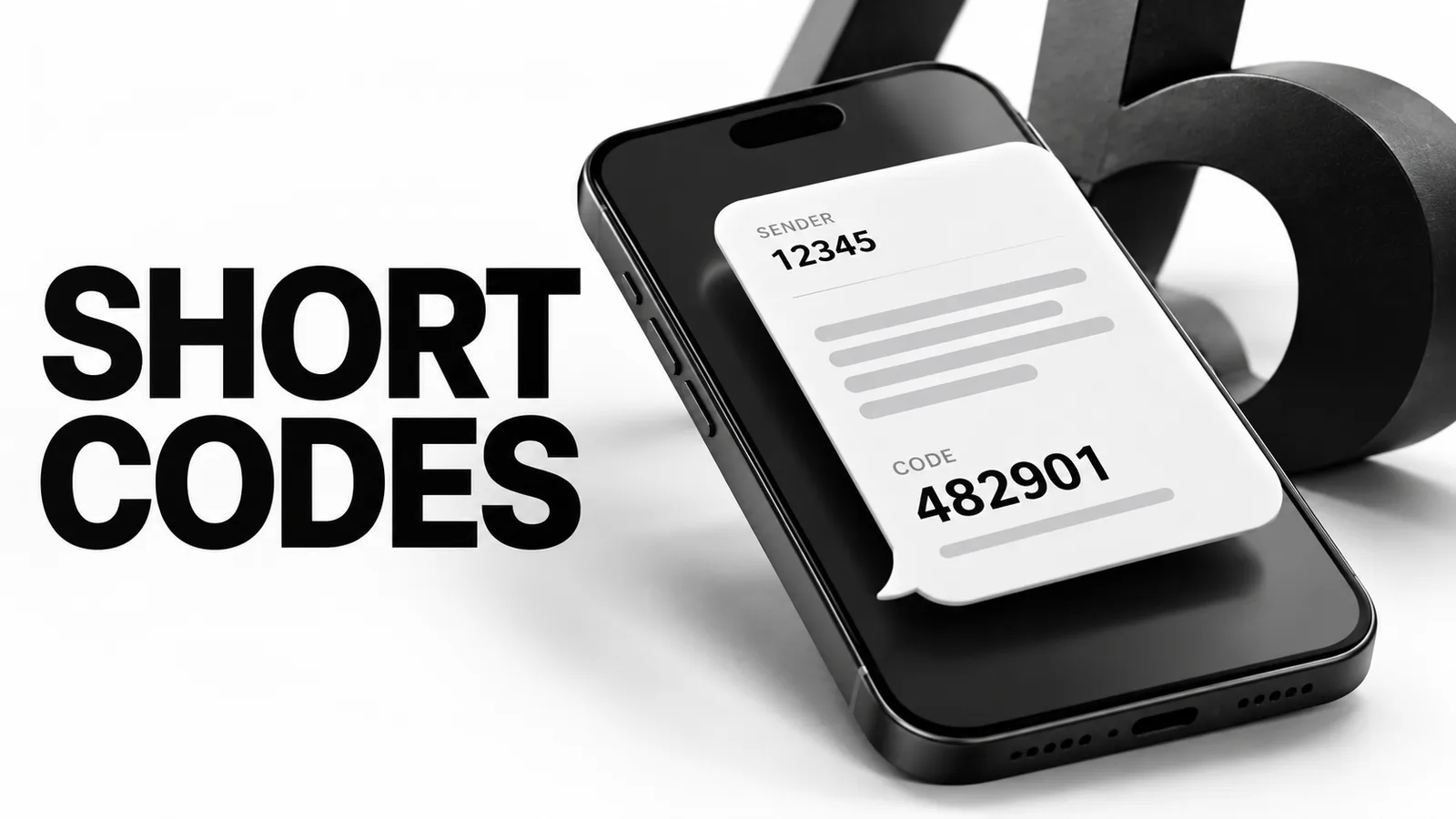
In an illustrative message, the sender field might show a five-digit short code while the body contains a six-digit login code. You enter the login code into the service that requested verification. You do not enter the sender's short code as the password.
In the OTP inbox example, distinguish the sender label from the text containing the code. A number shown as the sender and a number displayed inside the message have different roles.
The reverse distinction matters when a service asks you to text a keyword to a short code. In that case, the short code belongs in the recipient field and the instructed keyword belongs in the message body. Follow instructions from the service's official app or website rather than assuming every short number has the same purpose.
How short codes compare with regular numbers
| Type | How it looks in the US | What it is used for |
|---|---|---|
| Short code | Five or six digits | Messaging programs, including alerts and authentication |
| Long code | A ten-digit national phone number | Phone-number-based messaging; business sending may use A2P 10DLC registration |
| Alphanumeric sender ID | A name or a mixture of letters and digits | Branded sender identification in markets that support it |
The US Short Code Registry describes selecting a five- or six-digit code, leasing it and working with a partner to submit the messaging campaign for approval. The code is not created by removing digits from a normal phone number.
Outside the US, short-code lengths and arrangements differ. Twilio's short-code definition describes three- to seven-digit numbers across markets. Keep the country in mind when applying a US example elsewhere.
Do you add +1 before a short code?
Use the short code exactly as the messaging service specifies. Twilio's formatting guidance says messaging short codes do not take a leading plus sign or country code. Adding +1 does not turn one into an international phone number.
Ordinary US numbers follow a different pattern, explained in the US phone-number format guide. If an app requests your ten-digit mobile number, a five-digit sender you saw in an earlier message is not a replacement for it.
Can you reply to it or call it?
Short codes can support two-way SMS and MMS, but the messaging program determines the replies it accepts. A service may instruct you to send a keyword or contact support another way. Read its instructions before replying.
A US messaging short code is not a voice telephone number. The fact that a number can send you a text does not establish that you can call it. Likewise, a named sender ID may not accept replies at all. Twilio's sender-ID guide distinguishes numeric senders from alphanumeric ones.
Will the same short code work abroad?
Short codes are provisioned for particular countries and approved carrier networks. Twilio's international short-code guidance explains that a US short code does not become a worldwide destination simply because someone adds a country code.
Travel adds another question: the country of your number and the network serving you may affect delivery. Twilio notes that delivery to a supported US number while the user is abroad is not guaranteed. If a code is missing, check your carrier's support and the sending service's delivery options.
What to check when a short-code message is missing
Confirm the receiving number, the message's stated destination and any error or retry timer first. General SMS reception alone does not prove that a particular messaging program can reach that line. Follow the missing-code checklist before requesting repeated messages.
If you use a public browser inbox, compare the sender field and timestamp with your own request. The inbox guide explains how to inspect those details. Viewing a message does not reserve the receiving number or make its contents private.
For businesses choosing a sender, compare short codes, registered long codes and toll-free messaging with the provider. Check country coverage, approval, expected message volume, replies, voice needs and the full cost of setup and use. A shorter number alone does not remove filtering or guarantee delivery.