Burner Phone Number: How to Get One Without Buying Another Phone
A burner phone number is a second number used for a limited purpose or period of time. You can get one through an app, a prepaid mobile plan, an eSIM, a private rental, or a public receive-only service—often without carrying a second phone.
The best option depends on what you need the number to do. A public temporary number can be enough for a low-risk, one-time incoming SMS. A burner-number app is more useful when you need calls and two-way texts. A carrier or eSIM line is the safer choice for an account or relationship you intend to keep.
“Burner” does not automatically mean anonymous, untraceable, private, or accepted by every website. The number may be connected to an account, device, payment method, network, or provider records. It can also be recycled after you release it.
This guide explains how burner numbers work, the differences between the available options, and how to choose one without creating a security problem for yourself later.
The quick answer
You do not need to buy a disposable phone to get a burner number. Choose the option that matches your use:
One low-risk incoming SMS: a public temporary number may be sufficient.
A private short-term message: rent a private number for a defined period.
Calls and two-way texts: use a reputable second-number app.
A number you want to keep: choose a renewable eSIM or mobile plan.
Business communication: use a business phone or VoIP service.
Banking, recovery, or sensitive accounts: use a carrier number you control long term.
If you only need a public American inbox for a permitted, non-sensitive message, you can choose a free US temporary phone number. Messages on free public numbers are visible to other visitors, so never use them for financial accounts, private conversations, password recovery, or anything tied to your identity.
What is a burner phone number?
Traditionally, a “burner phone” meant an inexpensive prepaid handset and mobile plan used temporarily. When the owner no longer needed it, they stopped using the phone or allowed the prepaid service to expire.
A burner phone number separates the number from the physical device. Instead of buying another handset, you add a second line to the phone or computer you already use. The number may live inside an app, an eSIM profile, a web dashboard, or an online SMS inbox.
The defining feature is not secrecy. It is limited commitment: the number is separate from your main line and can be released when its purpose ends.
That distinction matters because “burner number,” “temporary number,” “virtual number,” and “second number” are often used as if they mean the same thing. They overlap, but they are not identical.
Burner phone vs burner number vs temporary number
Option | What you get | Calls | SMS | Typical privacy | Best for |
|---|---|---|---|---|---|
Physical burner phone | Separate handset and prepaid mobile line | Yes | Yes | Private line, subject to carrier records | Full separation and short-term mobile use |
Burner-number app | Second number inside an app | Usually | Usually | Account-based | Listings, projects, casual communication |
Public temporary number | Shared inbox on a website | Usually no | Receive-only | Public | Low-risk one-time messages and testing |
Private rented number | Number and private dashboard for a rental period | Varies | Usually receive-only or limited | Private during rental | Short-term private SMS |
eSIM second line | Digital carrier or virtual plan | Depends on plan | Depends on plan | Private account | Travel and longer-term second-line use |
Business VoIP number | Internet-based business line | Yes | Often | Account or team-based | Customer calls and work communication |
The label alone does not tell you whether a number supports voice, SMS, short codes, or verification messages. Always check the actual feature list.
Why do people use burner numbers?
There are ordinary, legitimate reasons to keep a second number separate from a personal line.
Online marketplace listings
A temporary contact number can keep a main number away from a public listing. Once an item is sold, the separate number can be retired or changed.
Short projects and freelance work
A project-specific number separates client communication from personal calls without requiring another phone.
Travel
An eSIM or app-based line may provide a reachable number while traveling. Travelers should confirm whether a plan includes voice and SMS; many travel eSIMs provide data only.
Dating and new social contacts
A second number can create a boundary before someone is trusted with a permanent personal line. It does not replace normal safety precautions or make abusive behavior acceptable.
Testing SMS features
Developers and QA teams may need a temporary line to confirm that a signup, notification, or one-time-password flow sends an SMS correctly. Public numbers should be used only with test data and non-sensitive messages.
Reducing unwanted follow-up
If a one-time interaction could lead to marketing calls or texts, a separate number can keep those messages away from the primary inbox.
The common theme is separation—not deception. A burner number should not be used to impersonate someone, evade a lawful restriction, harass people, or create fraudulent accounts.
Six ways to get a burner phone number
1. Use a second-number app
A second-number or burner app adds another line to your existing smartphone. Calls and texts are handled inside the app, usually over Wi-Fi or mobile data.
This is the most direct replacement for a physical burner phone when you need two-way communication. You can often select an area code, set voicemail, block callers, and release the number later.
Before signing up, check:
Whether incoming and outgoing SMS are included
Whether the number receives short-code messages
Whether voice calls are supported
How long you keep the number after inactivity
Whether emergency calling is available
What happens to the number after cancellation
Many app-based numbers are classified as VoIP. That is not inherently bad, but some verification systems reject VoIP numbers.
Best for: marketplace listings, short projects, dating, and a casual second line.
2. Use a public temporary SMS number
A public temporary number receives messages on a web page. There is no separate handset, and the service may not require an account. You copy a number, use it for a permitted incoming message, and open its public inbox in your browser.
The advantage is speed. The disadvantage is equally important: the inbox is shared. Anyone visiting the number's page may see the messages it receives.
Public numbers are usually receive-only and can rotate without notice. They may also have been used by other people, so a website can block a specific number even while its inbox remains active.
Best for: non-sensitive testing and low-risk, one-time inbound SMS.
Never use for: banking, cryptocurrency, healthcare, government services, personal conversations, account recovery, or an account you plan to keep.
3. Rent a private temporary number
A private rental gives you exclusive or restricted access to a number for a defined window. The inbox appears inside an account rather than on a public page.
This offers more privacy than a shared number, but “private” does not necessarily mean permanent. If the rental expires, the provider may reclaim and eventually reassign the number.
Ask these questions before paying:
How long is the rental period?
Can the number receive another message later?
Does it support the sender or message type you need?
Is the line mobile, VoIP, or another category?
What is the refund policy if no SMS arrives?
Best for: a private short-term message when public visibility is unacceptable.
4. Activate an eSIM second line
An eSIM is a digital SIM profile built into a compatible device. It can activate another mobile plan without inserting a physical card.
This can be a stronger choice when you want a number for weeks or months. A renewable eSIM plan may behave like a normal second carrier line and remain available as long as the account stays active.
Do not assume every eSIM includes a number. Some travel plans offer data only. Confirm voice, inbound SMS, outbound SMS, country, renewal, and number-retention details before buying.
Best for: travel, ongoing separation, and a number you may want to keep.
If you are comparing eSIM, apps, VoIP, and temporary numbers, see our complete guide to getting a US phone number without another SIM card.
5. Buy a prepaid phone or prepaid mobile line
The traditional burner setup is a low-cost phone paired with prepaid service. It gives you a separate device and a carrier number, which can be useful when physical separation matters.
It is less convenient than an app and creates more cost and electronic waste. Activation or identity requirements also depend on the provider and local law. A prepaid number is not magically untraceable simply because the plan is paid in advance.
Best for: users who need a separate physical device and full mobile service.
6. Use a VoIP or business phone service
Internet phone services provide numbers for calls, voicemail, and sometimes SMS. Google Voice, for example, says its US service provides a number for calls, texts, and voicemail through web and mobile devices, subject to availability and eligibility.
These services are useful for longer-term communication, especially for small businesses or people who work across several devices. They are not designed to be disposable public inboxes.
Check emergency-calling support and verification compatibility. Some free or consumer VoIP plans do not provide the same emergency features as a carrier mobile line.
Best for: work, customer calls, voicemail, and a stable second number.
How to choose the right burner-number option
Start with four questions.
1. Do you need calls, or only one incoming text?
For two-way calls and texts, use an app, eSIM, prepaid line, or VoIP service. A public SMS page is normally receive-only.
2. Does the message need to remain private?
If yes, do not use a public number. Choose a private rental or a number controlled through your own account.
3. Will you need the same number again?
If the answer might be yes, avoid a disposable public number. Account recovery frequently requires the original line months later.
4. Does the receiving service require a mobile number?
Websites can identify line types such as mobile, landline, fixed VoIP, and non-fixed VoIP. Twilio's number-intelligence documentation shows that these categories can be checked programmatically. If a service requires a mobile number, switching between VoIP apps is unlikely to solve the problem.
Free burner phone number: what does “free” actually mean?
Free options usually come with one or more tradeoffs:
Publicly visible messages
Advertising
Limited calling or texting
Number rotation after inactivity
A requirement to link another number
VoIP classification
Restricted locations or eligibility
Paid upgrades to keep the number
A free public number is the lowest-commitment option, but also the least private. A free app number may be private inside your account, yet require an existing mobile number or regular activity to remain assigned.
There is nothing wrong with choosing free when the limitations match the task. The mistake is expecting a free disposable line to behave like a permanent private mobile account.
Can a burner phone number be traced?
A burner number should not be assumed to be untraceable.
The provider may hold account, device, network, payment, usage, or subscriber records depending on the service and applicable law. The person you contact may also connect the number to you through the content of a conversation, shared accounts, profile information, or repeated behavior.
A separate number can reduce casual exposure of your main line. It does not create guaranteed anonymity and should never be marketed or used as if it makes illegal activity invisible.
If privacy is your goal, focus on minimizing unnecessary disclosure, reading the provider's privacy policy, securing the associated account, and avoiding sensitive information on shared services.
Is a burner phone number legal?
Having a second, prepaid, temporary, or app-based number is generally a normal communications choice in the United States. Legality depends primarily on how the number is used.
Fraud, threats, stalking, harassment, impersonation, phishing, and evading lawful restrictions can be illegal or violate platform rules regardless of which number is involved.
A burner number is also different from caller ID spoofing. A burner number is an assigned line that can normally receive calls or messages according to its features. Spoofing changes the caller ID presented to the recipient and may display a number the caller does not control. The FCC accepts complaints about harmful or illegal spoofing and unwanted calls and texts.
This article is general information, not legal advice. When a use case involves consent, regulated communications, or identity requirements, follow the relevant service terms and laws.
Burner number vs caller ID spoofing
Burner or second number | Caller ID spoofing |
|---|---|
A number assigned by a provider | A displayed caller ID may be altered |
Can usually receive replies if the service supports them | The displayed number may not belong to the caller |
Used through an app, carrier, eSIM, or web service | Changes what the recipient sees for a call |
Legitimate and abusive uses both exist | Harmful or fraudulent spoofing can violate the law |
Do not use the terms interchangeably. A temporary number does not need to fake another person's caller ID.
Can burner numbers receive verification codes?
Sometimes. Delivery depends on four separate questions:
Can the number technically receive SMS?
Can it receive automated or short-code messages?
Does the sender support that country and carrier route?
Does the sender allow that line type?
A valid number can still fail verification because it is VoIP, public, overused, or unsupported by that platform. No responsible provider can promise that every number works with every service.
If the sender accepted the number but the message never appeared, work through our guide for a verification code that was not received. It covers formatting, resend limits, short-code blocking, routing delays, and line-type restrictions.
How long does a burner number last?
There is no universal lifespan.
A public number may rotate at any time.
A private rental may last for one activation, a day, a week, or a month.
An app number may stay assigned while the account is active or subscribed.
An eSIM or prepaid number may remain active while the plan is renewed.
A released number may eventually be reassigned to someone else.
Read the retention rules before attaching the line to any account. If you will need the number for recovery, choose a renewable service that clearly explains how ownership is maintained.
Safety and privacy checklist
Before using a temporary or second number, follow these rules:
Know who can see the inbox. Public SMS pages are readable by other visitors.
Do not use disposable numbers for recovery. You may not control the line later.
Check voice and SMS features separately. A number may support one but not the other.
Review retention and recycling rules. Released numbers can be reassigned.
Secure the provider account. Use a strong password and available account protections.
Do not publish sensitive information. A second number is not a secure vault.
Follow platform terms. Do not use number rotation to evade bans or account limits.
Use a carrier line for critical services. Banking, health, government, and recovery accounts need a number you control.
Confirm emergency support. Do not rely on an app or VoIP line for emergency calling unless the provider explicitly supports it.
Release the number responsibly. Remove it from accounts before canceling or allowing it to expire.
When you should not use a burner number
A short-term number is a poor choice when continuity or verified ownership matters.
Avoid disposable numbers for:
Bank and payment accounts
Cryptocurrency wallets and exchanges
Government and tax portals
Medical and insurance services
Primary email recovery
Employer security systems
Long-term business identity
Emergency contact information
Any account you cannot afford to lose
For those uses, choose a stable mobile line or another strong authentication method such as an authenticator app, passkey, backup code, or hardware security key when the service supports it.
Frequently asked questions
What is a burner phone number?
It is a second phone number used for a limited purpose or period rather than as a permanent personal line. It may come from an app, prepaid plan, eSIM, private rental, or temporary SMS website.
Do I need a second phone to get a burner number?
Apps, eSIM plans, VoIP services, rentals, and public SMS websites can provide another number on your existing phone or through a browser.
How do I get a free burner phone number?
Free options include public receive-only numbers and some account-based second-number services. Check whether the inbox is public, whether calls are supported, how long the number remains assigned, and whether another mobile number is required.
Is a burner number the same as a temporary phone number?
Sometimes, but not always. A burner number is any secondary line intended for limited use. A temporary number emphasizes a short lifespan. Some burner-app numbers can be kept for months, while a public temporary number may change quickly.
Is a burner phone number anonymous?
Not necessarily. Providers may maintain records, and your activity can connect the number to you. Treat it as separation from your main line, not guaranteed anonymity.
Can a burner number make calls and send texts?
App, prepaid, eSIM, and many VoIP numbers can support two-way calls and texts. Public temporary numbers are usually receive-only. Verify the feature list before choosing.
Can a burner number receive SMS verification codes?
Some can, but acceptance is controlled by the sender. A platform may block VoIP, public, recycled, or previously overused numbers even when the number itself can receive SMS.
What is the difference between a burner number and a fake number?
A burner number is an assigned, functioning line. A random or fake-number generator may create digits that merely look valid and cannot receive calls or messages. A generated number may also belong to a real person, so never use random numbers as contact details.
Can someone call a burner number back?
Yes, if the service supports incoming voice calls and the number remains active. Receive-only SMS numbers generally do not accept calls.
What happens when I release a burner number?
The provider may place it in a waiting period and later reassign it. Remove the number from all accounts and contacts before releasing it.
Does the area code matter?
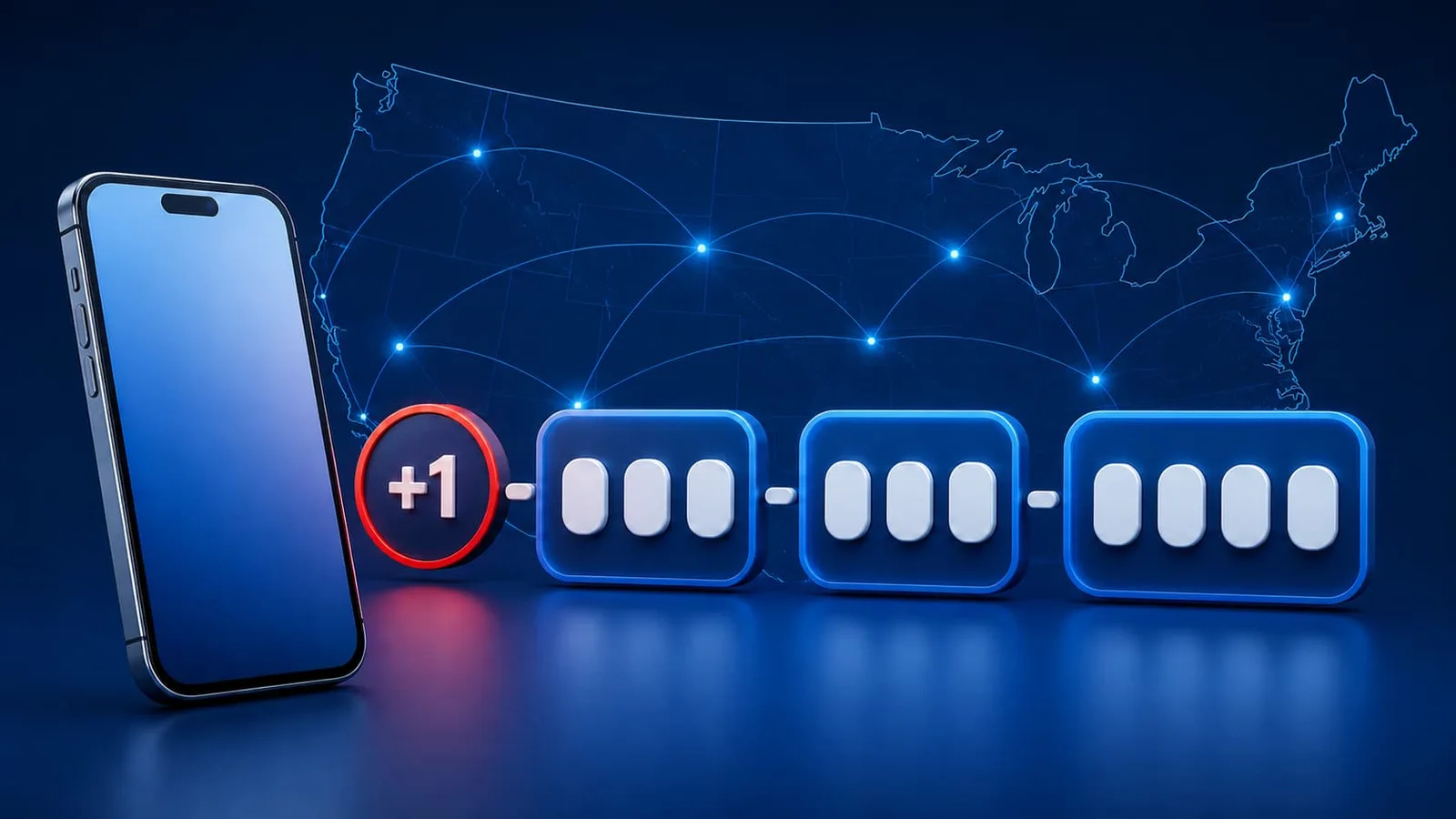
It may matter for familiarity or local business presence, but it does not prove your current location. If you use a US line, make sure it follows the correct US phone number format and is actually assigned to the United States rather than assuming every +1 number is American.
Final thoughts
A burner phone number is useful when you need separation from your main line, but the word “burner” covers several very different products.
Use a second-number app for calls and ongoing texts, a private rental for short-term privacy, an eSIM or prepaid plan for continuity, and a public inbox only for low-risk, non-sensitive reception.
If that final option fits your use case, you can view currently available United States numbers. Treat every public message as visible to others, follow the sender's rules, and switch to a number you control whenever the account or conversation matters.